Introduction
The trucking industry is no longer just about moving goods from one place to another. Today, it is about speed, precision, and efficiency, and at the center of this transformation are two critical logistics systems: warehousing and cross-docking.
As of 2026, businesses across the supply chain—carriers, brokers, shippers, service providers, and even researchers—are relying heavily on these systems to stay competitive. The rapid growth of e-commerce, rising customer expectations for faster delivery, and increasing operational costs have forced logistics players to rethink how goods are stored and moved.
Warehousing and cross-docking are no longer optional strategies. They are essential tools for daily operations, helping companies reduce costs, improve delivery times, and maintain flexibility in an unpredictable global market.
Understanding Warehousing and Cross-Docking
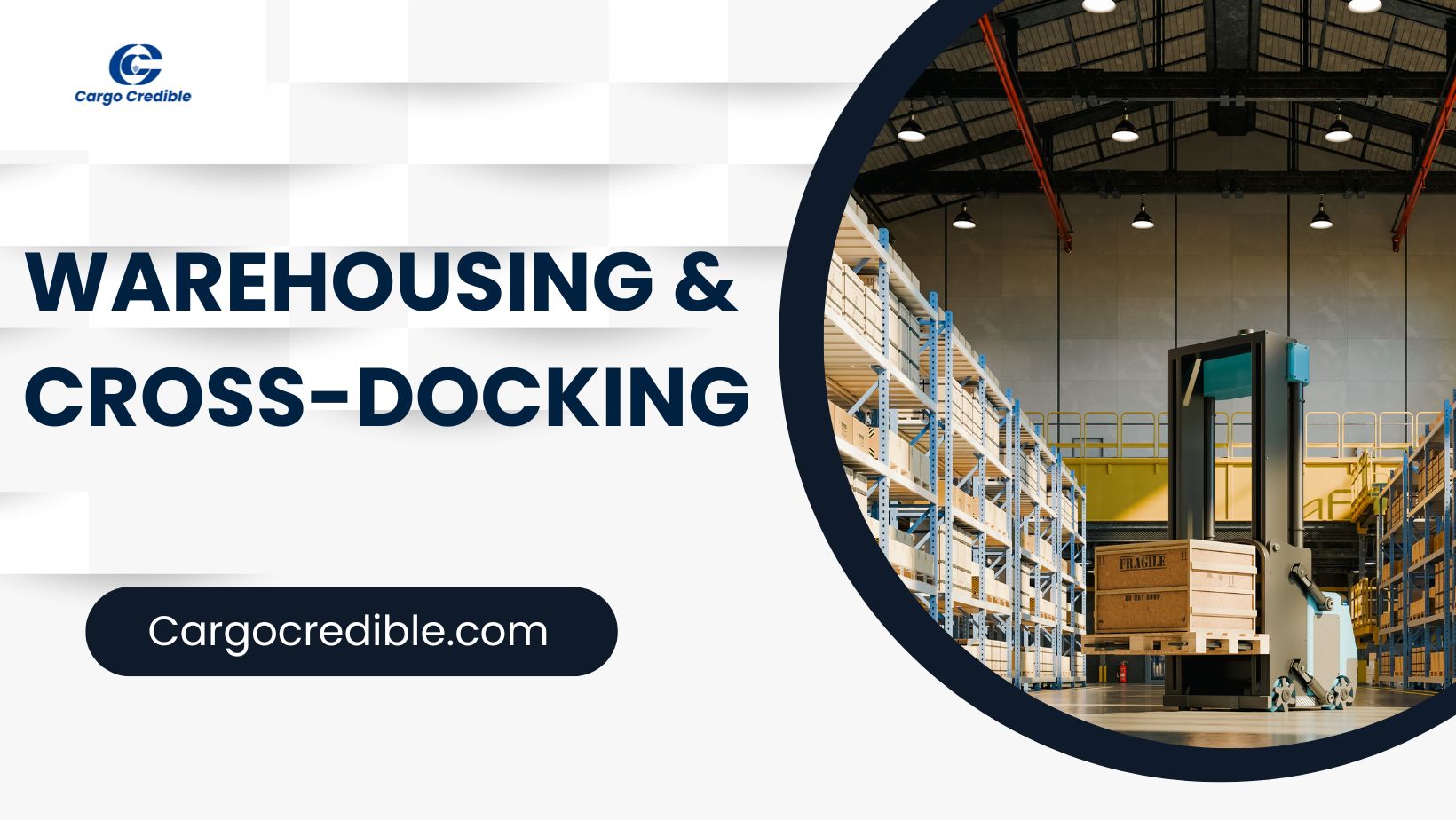
Warehousing is the traditional backbone of logistics. It involves storing goods before they are distributed to customers or retail locations. However, modern warehousing has evolved far beyond simple storage. Today’s warehouses function as dynamic logistics hubs, offering services such as inventory management, picking and packing, sorting, and consolidation.
In contrast, cross-docking is built around speed. Instead of storing goods, it focuses on keeping them in motion. Products are received at a facility, sorted quickly, and then transferred directly to outbound trucks. In many cases, this process takes less than four hours.
While these two systems may seem different, most companies today use a hybrid approach. Slow-moving or unpredictable inventory is stored in warehouses, while fast-moving, high-demand goods are handled through cross-docking.
Market Growth and Industry Direction
The global logistics industry is experiencing steady growth, and cross-docking is a major driver of this expansion. The market, valued at over $225 billion in 2025, is projected to exceed $400 billion by 2035. This growth is fueled by the increasing demand for faster and more reliable delivery services.
Customer expectations have changed dramatically. Today, nearly 70% of consumers expect same-day or next-day delivery. This shift has forced companies to adopt faster logistics models, making cross-docking more relevant than ever.
Regionally, North America leads in adoption, with strong infrastructure and advanced technology systems. Europe follows closely, focusing heavily on sustainability and efficiency. Canada benefits from strong cross-border trade networks, while Africa is emerging as a high-growth region with significant untapped potential.
Key Performance Metrics That Drive Success
Success in warehousing and cross-docking is measured through specific performance indicators. These metrics are critical for maintaining efficiency and profitability.
For cross-docking operations, one of the most important metrics is dock time, which ideally should remain under four hours. Facilities also aim for accuracy rates above 99% and high door utilization to ensure smooth operations.
Warehousing, on the other hand, focuses on metrics such as inventory turnover, space utilization, and order accuracy. These indicators help businesses manage stock levels effectively and reduce unnecessary costs.
In 2026, performance is no longer judged by output alone. Instead, companies are evaluated based on how quickly and accurately they can move goods through the supply chain.
Technology and Automation: The Backbone of Modern Logistics
Technology has become the driving force behind modern logistics operations. Systems such as Warehouse Management Systems (WMS) and Transportation Management Systems (TMS) act as the control centers of logistics networks, coordinating inventory, shipments, and scheduling.
Automation is also playing a major role. Tools like autonomous mobile robots (AMRs), robotic sorting systems, and RFID tracking are becoming increasingly common. These technologies reduce manual labor, improve accuracy, and significantly increase throughput.
Artificial intelligence is another game changer. AI-powered systems can forecast demand, optimize routes, and even predict potential disruptions before they occur. Real-time tracking tools provide complete visibility, allowing businesses to make faster and more informed decisions.
Operational Benefits for Key Stakeholders
Different stakeholders benefit from warehousing and cross-docking in unique ways.
For carriers and drivers, cross-docking reduces waiting times and improves route efficiency. Faster turnaround times mean more trips and better earnings potential.
For brokers and shippers, these systems offer cost savings and faster delivery cycles. Cross-docking, in particular, allows for better load consolidation, reducing transportation costs.
Service providers, such as third-party logistics companies, benefit from scalability and improved operational efficiency. They can handle higher volumes without significantly increasing costs.
For researchers and analysts, these systems provide valuable data for studying supply chain performance, optimization models, and emerging trends.
Challenges and Risk Factors
Despite their advantages, warehousing and cross-docking come with challenges. Cross-docking requires perfect coordination. If inbound shipments are delayed or inaccurate, the entire operation can be disrupted. This makes it highly dependent on supplier reliability and accurate data.
Warehousing, while more stable, comes with high costs. These include real estate expenses, labor, and inventory holding costs. There is also the risk of overstocking, which ties up capital and reduces efficiency. Technology integration is another major challenge. Many companies struggle to implement advanced systems due to high costs and technical complexity.
Regional Analysis
United States
The United States is the most advanced market for warehousing and cross-docking. Over half of retailers have adopted cross-docking to meet fast delivery expectations. The country benefits from strong infrastructure, advanced technology, and a highly competitive logistics sector.
Canada
Canada’s logistics industry is closely tied to the United States, with a strong focus on cross-border trade. Efficient transportation networks and government support have helped the country build a reliable logistics system.
Europe
Europe is known for its focus on sustainability. Many logistics companies are investing in green technologies, including electric fleets and energy-efficient warehouses. Automation is also widely adopted across the region.
Africa
Africa represents a growing opportunity in the logistics sector. While infrastructure challenges remain, investment in digital platforms and transportation networks is increasing. Countries across the continent are beginning to adopt modern logistics practices, creating significant potential for growth.
Top Global Companies and Platforms
Several global players dominate the warehousing and cross-docking space.
- DHL Supply Chain – A global leader with extensive logistics networks and advanced solutions
- XPO Logistics – Known for its technology-driven approach to freight and distribution
- Ryder System – Specializes in fleet management and integrated logistics solutions
- UPS Supply Chain Solutions – Offers end-to-end logistics services worldwide
- C.H. Robinson – A major player in freight brokerage and supply chain management
On the technology side, platforms such as Magaya, CartonCloud, and TransPlus provide essential tools for managing logistics operations, improving visibility, and enhancing efficiency.
The Shift Toward Hybrid Logistics Models
One of the most important trends in 2026 is the move toward hybrid logistics models. Instead of choosing between warehousing and cross-docking, companies are combining both approaches.
This strategy allows businesses to:
- Store goods when necessary
- Move goods quickly when demand is high
- Balance cost with speed
The result is a more flexible and resilient supply chain.
Future Outlook (2026–2035)
Looking ahead, the logistics industry will continue to evolve rapidly. Speed will remain the most important factor, but efficiency and sustainability will also play major roles.
Warehouses will increasingly function as flow-through hubs, focusing more on movement than storage. Cross-docking will continue to expand, especially in e-commerce and retail sectors.
Automation and artificial intelligence will become standard, reducing reliance on manual labor and improving decision-making. Sustainability initiatives, including green logistics and energy-efficient operations, will also gain importance.
Ultimately, the companies that succeed will be those that can adapt quickly, invest in technology, and optimize their logistics networks.
Conclusion
Warehousing and cross-docking are no longer just operational tools—they are strategic assets that define success in the trucking industry.
As the industry moves toward faster, more efficient, and more connected systems, businesses must embrace both models and use them wisely. Whether it is through storage, speed, or a combination of both, the goal remains the same: to move goods as efficiently as possible while meeting the ever-growing demands of customers. The future of logistics belongs to those who can master this balance.
Comments (0)
Leave a comment
Sign in to leave a comment.