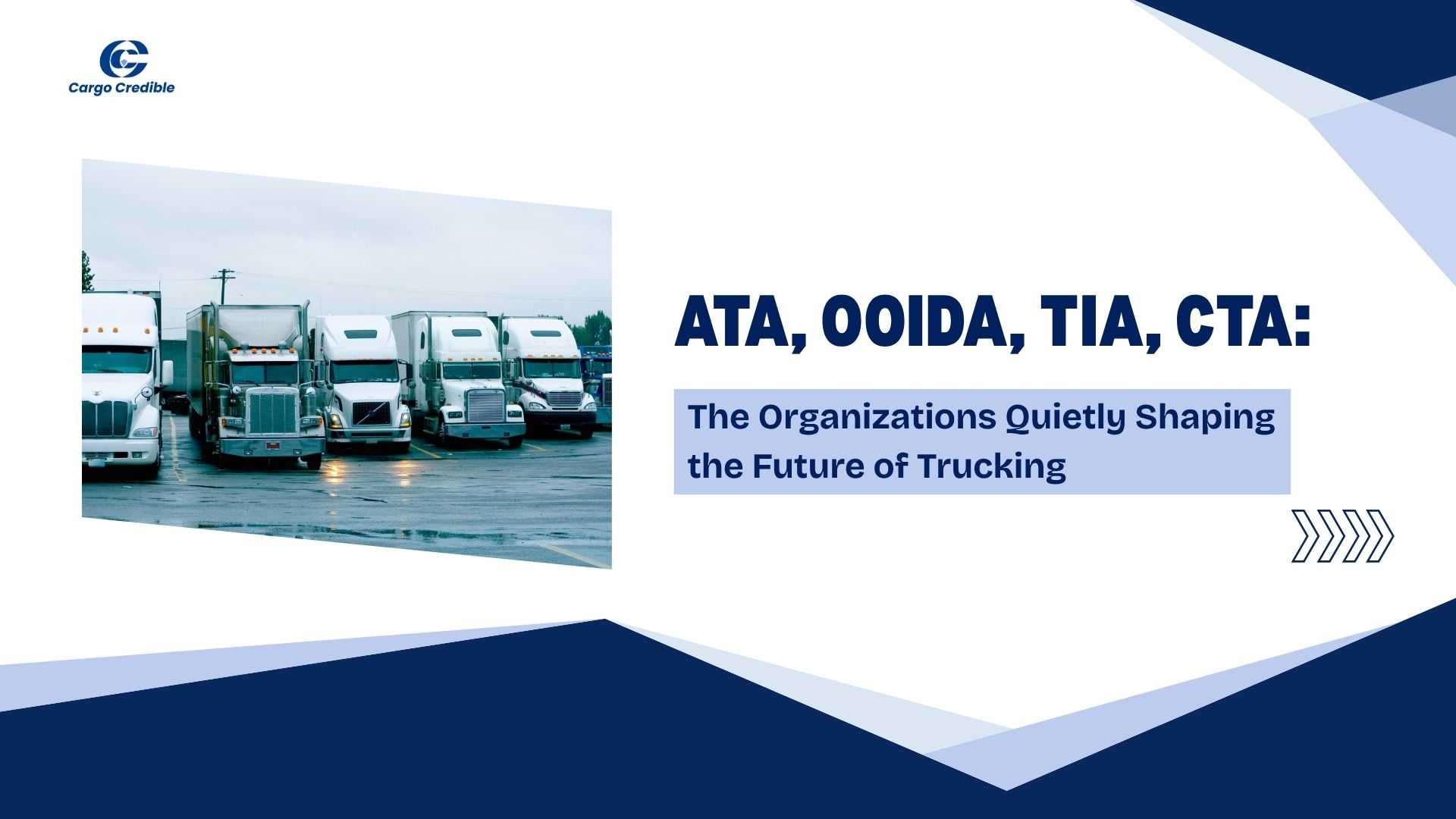
Most Truckers Know the Names—But Few Realize How Much Power They Have
Imagine finishing a long day behind the wheel and spending another hour searching for a safe parking spot, or finding out that a new rule affecting your CDL, electronic logs, insurance costs, or broker relationships was influenced by an organization you've never joined.
The truth is, many of the biggest decisions affecting trucking today are shaped long before they reach drivers, carriers, brokers, or shippers. Behind the scenes, trucking associations work with lawmakers, regulators, and industry leaders to influence policies that impact how freight moves across North America. Whether you're a company driver, owner-operator, fleet owner, freight broker, or shipper, these organizations have a direct impact on your business and your daily operations.
Why Trucking Associations Are Needed
The trucking industry operates under thousands of federal, state, and provincial regulations covering everything from safety and Hours-of-Service compliance to emissions standards, insurance requirements, labor policies, and freight transportation.
Trucking associations exist to ensure that industry stakeholders have a voice when those regulations are created or updated. Their influence extends to safety regulations, truck parking initiatives, driver training standards, environmental policies, freight broker regulations, tax and infrastructure funding, insurance requirements and cross-border transportation In short, they help determine the rules of the game.
Meet the Industry's Most Influential Organizations
ATA: The Voice of America's Trucking Fleets
The American Trucking Associations (ATA) is the largest trucking trade association in the United States and is often considered the trucking industry's primary voice in Washington, D.C.
ATA represents trucking companies, state trucking associations, industry suppliers and transportation partners. The organization works directly with Congress, federal agencies, and state governments to advocate for policies that improve highway safety, infrastructure investment, supply chain efficiency, workforce development, environmental sustainability and industry profitability
Why Truckers Should Care About ATA
ATA frequently supports:
- Increased truck parking funding
- Highway infrastructure projects
- Driver recruitment initiatives
- Safety training programs
- Freight efficiency improvements
Many of the policies ATA supports directly affect how carriers operate and how efficiently freight moves across the country.
The Criticism
Not everyone agrees with ATA's approach. Some independent truckers and owner-operators argue that ATA's priorities often favor larger fleets because major carriers make up a significant portion of its membership. Critics believe certain policies can increase competition for smaller operators, while ATA maintains it represents the interests of the entire industry.
OOIDA: The Independent Trucker's Advocate
If ATA is often viewed as the voice of carriers, OOIDA is widely considered the voice of independent truckers. Founded in 1973, the Owner-Operator Independent Drivers Association represents more than 150,000 members across the United States and Canada. Its mission is simple protect owner-operators, advocate for independent truckers, promote fair treatment, help to improve highway safety and support small trucking businesses Unlike ATA, OOIDA focuses heavily on individual drivers and small fleets.
How OOIDA Helps Drivers
OOIDA provides members with:
- Regulatory guidance
- Insurance programs
- Compliance assistance
- Licensing support
- Driver education
- Political advocacy
For many new owner-operators, OOIDA serves as a valuable resource for navigating the complexities of running a trucking business.
Issues OOIDA Continues to Fight For
OOIDA has long advocated for:
- Fair broker practices
- Broker transparency
- Driver compensation reform
- Reasonable Hours-of-Service regulations
- More truck parking
- Independent contractor protections
- Opposition to unnecessary regulations
Many truckers view OOIDA as one of the strongest defenders of small-business trucking interests.
TIA: The Organization Representing Freight Brokers
The Transportation Intermediaries Association (TIA) represents freight brokers, third-party logistics providers (3PLs), and transportation intermediaries. Because brokers serve as the connection between carriers and shippers, TIA plays an important role in shaping freight movement across North America.
TIA focuses on:
- Broker education
- Ethical business practices
- Fraud prevention
- Industry standards
- Government advocacy
Why Brokers Value TIA
TIA helps members:
- Navigate regulations
- Reduce cargo theft and fraud
- Improve compliance
- Develop operational best practices
As freight fraud continues to rise across the industry, TIA's role has become increasingly important.
The Broker Transparency Debate
One of the biggest disagreements in trucking today involves broker transparency. OOIDA has pushed for stronger transparency requirements that would allow carriers greater access to transaction records and broker-related information.
TIA and many brokers argue that additional transparency requirements could create administrative burdens and raise concerns about customer confidentiality. The debate remains one of the industry's most closely watched policy battles.
CTA: Canada's Trucking Voice
The Canadian Trucking Alliance (CTA) serves as Canada's national trucking federation and represents provincial trucking associations and motor carriers across the country. CTA focuses on driver shortages, cross-border transportation, road safety, environmental initiatives, labor and immigration issues and supply chain efficiency
Why CTA Matters
Canada's economy depends heavily on trucking, especially trade with the United States.
CTA helps shape policies involving:
- Cross-border trucking regulations
- Driver recruitment efforts
- Commercial vehicle standards
- Infrastructure investments
The organization's work helps keep freight moving smoothly between the two countries.
The Big Regulatory Battles Happening Right Now
FMCSA Broker Transparency Rule
One of the most significant ongoing debates involves broker transparency. Federal regulations already allow parties involved in brokered freight transactions to review transaction records. However, some agreements contain waivers that limit access to that information.
OOIDA supports stronger transparency requirements, arguing that carriers deserve better visibility into freight transactions and broker margins. Supporters say the rule could provide greater visibility into freight transactions, better understanding of broker margins and stronger negotiating power for carriers
Broker organizations, including many represented by TIA, have raised concerns about increased compliance requirements, administrative burdens and customer confidentiality issues
Infrastructure and Highway Funding
ATA has consistently advocated for greater investment in America's transportation infrastructure. Why?
Because poor infrastructure affects:
- Freight efficiency
- Driver productivity
- Fuel costs
- Traffic congestion
- Supply chain performance
Every hour spent in congestion costs carriers money and reduces efficiency.
The Truck Parking Crisis
Few issues unite truckers more than parking. Safe truck parking remains one of the industry's biggest challenges. Organizations like ATA and OOIDA continue pushing for federal truck parking grants, expanded parking facilities and improved driver safety initiatives. A lack of parking affects hours-of-Service compliance, driver safety, driver retention and operational efficiency
Environmental and Emissions Regulations
The transition toward cleaner transportation has created new debates throughout the industry.
Current discussions focus on:
- Electric trucks
- Zero-emission vehicle mandates
- Charging infrastructure
- Fleet transition costs
While many organizations support environmental improvements, concerns remain about whether current infrastructure can support widespread heavy-duty truck electrification.
New Laws and Regulatory Changes Every Trucker Should Know
Dalilah's Law (2026)
Dalilah's Law has emerged as one of the most significant trucking-related legislative efforts in recent years. The legislation aims to:
- Strengthen CDL requirements
- Improve driver training standards
- Close licensing loopholes
- Strengthen English-language proficiency verification
- Improve CDL oversight and accountability
Notably, the law has received support from:
- ATA
- OOIDA
- Truckload Carriers Association
- National Tank Truck Carriers
- 48 state trucking associations
Supporters argue the law will improve safety and restore consistency to CDL testing and licensing nationwide.
ELD Mandate Updates
Electronic Logging Devices remain one of trucking's most debated topics. Recent FMCSA updates require carriers to use compliant ELD systems or risk violations. ATA supports ELD requirements, arguing they improve safety, increase efficiency, reduce paperwork and help prevent driver coercion
OOIDA continues to challenge aspects of the mandate, arguing electronic monitoring is not necessarily more reliable than traditional paper logs for ensuring Hours-of-Service compliance.
CSA Score Overhaul
FMCSA recently updated its Compliance, Safety, Accountability (CSA) program. Changes include:
- Renaming BASICs to Compliance Groups
- Simplifying severity weight scales
- Giving more weight to recent violations
- Increasing emphasis on Hours-of-Service and maintenance violations
ATA, OOIDA, and the National Tank Truck Carriers all provided feedback that helped shape the final revisions.
Why Trucking Associations Actually Matter on the Road
At the end of the day, trucking associations do far more than attend meetings and lobby lawmakers. They perform three critical functions:
They Advocate
Whether it's CDL reform, broker transparency, truck parking, or ELD regulations, associations ensure the industry's voice is heard when major decisions are being made.
They Educate
Associations provide training, compliance resources, leadership development, and safety programs that help professionals stay current with changing regulations.
They Promote the Industry
They help educate the public about trucking's role in the economy while working to improve safety, professionalism, and respect for the people who keep freight moving.
The Bottom Line
The trucking industry's most influential associations each serve different stakeholders.
- ATA represents carriers and the broader trucking industry.
- OOIDA represents owner-operators, small fleets, and professional drivers.
- TIA represents freight brokers and logistics intermediaries.
- CTA represents Canadian trucking companies and provincial associations.
While these organizations often disagree on major issues, they all play a role in shaping the future of transportation through advocacy, education, research, and regulatory involvement.
Whether you're hauling freight, managing a fleet, negotiating loads, or shipping products across North America, the decisions made by these organizations eventually reach the road—and when they do, they affect everyone in trucking.
Comments (0)
Leave a comment
Sign in to leave a comment.